 Ground Truth
 Property Owners
Property Documentation: Maximizing Value Across the Ownership Lifecycle
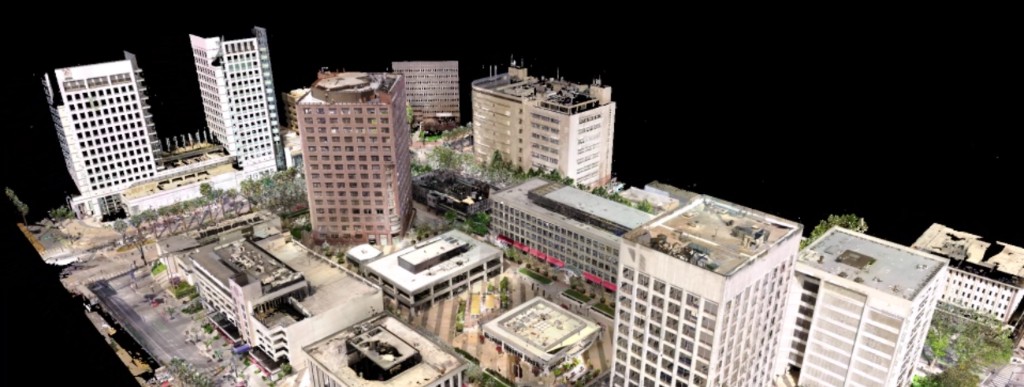
Effective 21st-century governance and sustainable development rely on a foundation of accurate, comprehensive data. Existing Conditions Documentation (ECD) provides the accurate visual baseline to enhance the efficiency, equity, and resilience of Civic Planning.
ECD is defined as the comprehensive collection of spatial and non-spatial data—including traditional surveys, Geospatial Information System (GIS) data, detailed 3D models, and historical records—that precisely maps the current physical, environmental, and social landscape of a jurisdiction. Civic Planning encompasses public activities aimed at guiding community development, such as urban development, infrastructure design, and resource allocation.
The fundamental obstacle to modern civic planning is the disconnect between current, often static documentation methods and the dynamic, real-time needs of planning. Documentation frequently exists in siloed, outdated, or inaccessible formats, resulting in reactive planning, project delays, and suboptimal resource distribution. The systematic integration of comprehensive ECD is essential. By embracing dynamic, centralized data streams, municipalities can make evidence-based decisions that optimize infrastructure investment, streamline regulatory processes, and significantly improve public safety and quality of life.
The scope of modern ECD is vast, drawing power from diverse and precise data sources. Key types include Geospatial Data (GIS, satellite imagery), Infrastructure Documentation (CAD files, utility maps), Environmental and Social Data (demographics, land use), and advanced Reality Capture techniques like Light Detection and Ranging (LiDAR) and photogrammetry, which create highly accurate 3D models of existing structures and terrain. This process is evolving from a periodic task into continuous monitoring, integrating real-time sensor networks (IoT) and secure cloud storage.
ECD provides critical precision for several key areas of civic planning:
Accurate documentation enables a shift from reactive repairs to predictive maintenance by assessing asset age and condition, which extends asset life and reduces catastrophic failures. Detailed mapping of underground utilities also prevents costly strikes during construction. Furthermore, current data optimizes transportation networks, improving commuter efficiency and safety.
Planners use 3D models and capacity data to accurately model the impact of new density and mixed-use development on existing infrastructure, ensuring sustainable growth. Precise documentation is also key to identifying and preserving culturally, environmentally, or historically sensitive areas.
Detailed models and geospatial data allow for the precise assessment of community vulnerability to natural hazards, guiding mitigation efforts. Following a disaster, up-to-date ECD facilitates rapid damage assessment and effective recovery logistics, helping authorities prioritize resource allocation.
To fully realize these benefits, municipalities must adopt comprehensive strategies focused on standardization, centralization, and collaboration. Standardizing data collection protocols is essential for seamless integration across all municipal agencies and contracted partners. Centralization requires investing in a robust, secure data platform to serve as a “single source of truth” and ensure interoperability. Collaboration must foster engagement among all stakeholders—public agencies, private developers, and community groups—utilizing visualization tools to increase transparency and community buy-in.
The transition to an ECD-centric model is not without significant hurdles. Technical and financial barriers include the high upfront costs of advanced technologies like widespread LiDAR mapping and the substantial need for specialized technical training for municipal staff. Furthermore, centralized data raises critical issues of governance and privacy, requiring policies to manage sensitive infrastructure data and protect personal data (PII) collected via demographic surveys. The greatest risk is data decay; thus, maintaining accuracy requires a continuous commitment to regular updates and validation.
The systematic adoption of Existing Conditions Documentation moves civic planning into an era of unprecedented efficiency, transparency, and resilience. ECD must be viewed not as a one-time project, but as a continuous, dynamic process that requires dedicated, ongoing resources to ensure planning decisions are always grounded in the most current reality. Further research should focus on developing standardized, open-source models for ECD data interoperability and quantifying the long-term Return on Investment (ROI) of advanced reality capture technologies.
Property Documentation: Maximizing Value Across the Ownership Lifecycle
Accurate plans and models fast
2D Plans, 3D models and thorough Photo Documentation
Planning for transition, growth and safety with ECD
Efficient, profitable, property operation and management with ECD
ECD: The Blueprint for Flawless Events
Cost Reduction and Risk Mitigation in Construction
An accurate foundation for success in modern landscape architecture
Discuss how ECD can support your civic planning initiatives.
Get in TouchA comprehensive list of types of buildings, sites, and campuses Ground Truth 3D has scanned, with links to content where available.
Discuss scope, deliverables, and timeline with our team.
Get in TouchStart with a conversation about your documentation needs.
Get in Touch