 Ground Truth
 Property Owners
Property Documentation: Maximizing Value Across the Ownership Lifecycle
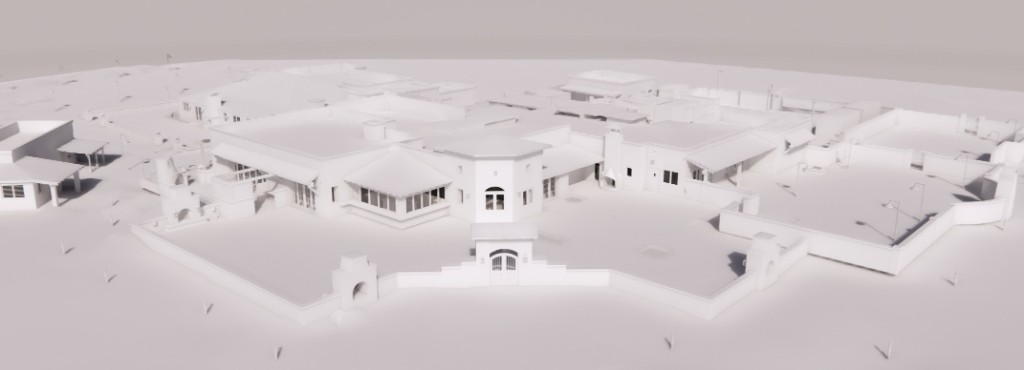
Hotel modernization is an inherently complex endeavor, challenged by the age of the structure, the heterogeneous nature of guest-facing and back-of-house facilities, and the continuous need to comply with modern standards for comfort, energy consumption, and life safety. Refurbishing an active hospitality property requires balancing essential upgrades with maintaining continuous operations and minimizing guest disturbance.
The rapid, accurate generation of Existing Conditions Documentation (ECD) allows for efficient and predictable project planning and delivery. It furnishes an authoritative, dependable digital record of the structure's physical state, serving as a dimensionally accurate digital "master file". ECD involves generating a detailed array of digital artifacts, typically Building Information Models (BIM), high-resolution spatial photos, and precise dimensioned drawings. In contrast to conventional plans, contemporary ECD is captured using state-of-the-art methods like 3D laser scanning (LiDAR), aerial photogrammetry, and unmanned aerial vehicle (UAV) systems. The resulting information is rigorously verified for dimensional accuracy, capturing all elements from structural components to mechanical system pathways and exact ceiling clearances.
Hotel facilities are diverse and complicated, encompassing everything from guest suites and ballrooms to commercial kitchens and utility rooms, often modified piecemeal over years. A critical risk factor is the dependence on inadequate or dated blueprints, which invariably results in construction ambiguities, unforeseen site conditions, scope expansion, and project slowdowns that directly impact revenue predictability.
To effectively navigate these obstacles, sector leaders are increasingly adopting advanced facility surveying techniques. ECD is a requisite precursor for ensuring efficient and predictable project delivery and managing fiscal risk. It furnishes the same authoritative digital record and verified spatial context described above—serving teams from planning through turnover.
The strategic value of a comprehensive ECD package spans the entire project lifecycle, benefiting all stakeholders. During the architectural phase, this verified spatial context enables design teams to pinpoint potential conflicts, calculate material volumes accurately, and verify regulatory adherence prior to mobilizing on site. This preparation minimizes the necessity for costly schematic revisions. Throughout the renovation cycle, the complete ECD acts as a critical field guide for streamlining construction execution. On-site personnel can cross-reference planned installations with the actual structure, facilitating expedited component pre-fabrication, reducing field measurements, and limiting unforeseen cost adjustments stemming from dimensional inaccuracies. The visual clarity of the documentation also improves adherence to the work schedule.
Crucially, ECD supports the long-term property administration following project completion. Management staff gain instant access to the precise whereabouts of vital infrastructure, including mechanical, electrical, and plumbing (MEP) systems. This capability cuts down on the time required for maintenance diagnosis, enhances the reliability of preventative service schedules, and simplifies future capital project forecasts, collectively diminishing the asset's overall lifetime cost. Furthermore, accurate floor plans and 3D models are essential for preserving the guest experience. They allow management to visualize potential operational disruptions in active areas and schedule complex renovations to maximize guest satisfaction and minimize room inventory downtime.
The generation of contemporary ECD typically follows a two-stage method: field crews deploy 3D laser scanners to create a "point cloud," which is then transformed into project-ready BIM or 2D schematic sets in an office environment. While professional ECD services may represent an initial outlay in the range of 0.5% to 2% of the overall construction value, this is recognized as a proactive measure against cost overruns from unexpected structural or MEP complications. This initial investment offers a compelling return on investment (ROI) by significantly diminishing the financial exposure traditionally linked with last-minute field adjustments. Given the specialized nature of modern hotel refurbishment, incorporating contemporary ECD protocols into the earliest planning stages is strongly advised to guarantee a resilient and financially rewarding result.
Property Documentation: Maximizing Value Across the Ownership Lifecycle
Accurate plans and models fast
2D Plans, 3D models and thorough Photo Documentation
Planning for transition, growth and safety with ECD
Efficient, profitable, property operation and management with ECD
ECD: The Blueprint for Flawless Events
Cost Reduction and Risk Mitigation in Construction
An accurate foundation for success in modern landscape architecture
Planning a hotel modernization or refurbishment? Discuss scope, BIM level, and schedule with our team.
Get in TouchA comprehensive list of types of buildings, sites, and campuses Ground Truth 3D has scanned, with links to content where available.
Discuss scope, deliverables, and timeline with our team.
Get in TouchStart with a conversation about your documentation needs.
Get in Touch